

April 14, 2026 | Carol Hymowitz
I’ve spent a lifetime pursuing career success. Now I needed to ask myself: Was it time to shift focus? And how do I do that?
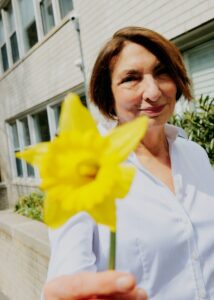
Carol Hymowitz
I left my last full-time job a few months before I turned 70, but in reality, I never really stopped working. Instead of swapping work for play, I became a freelance writer, a part-time journalism professor and a research fellow at a university. I was as ambitious for career success as I had ever been, finding comfort in knowing I always had an answer when I was asked, “What do you do?”
Then last year, I was forced to stop. I fractured my right arm, wrist and elbow, and had two complicated surgeries. Then, a month later, I had a heart attack—a mild one, fortunately—which was diagnosed as being caused by anxiety. And what was I anxious about? Not being able to type on my laptop, keep writing and doing work that brought me recognition and praise. I was distressed about who I would be if my arm was permanently damaged.
While I was laid up, I spent time reading on social media about former colleagues who were publicizing new books, speaking at conferences and otherwise staying in the limelight—and I felt envious. But I also started taking notice of friends who had chosen a less-driven path. One friend, a former senior executive at a finance company, had turned down several prestigious offers to join corporate boards and instead was planting a garden at her summer home in Maine and growing vegetables.
It all made me think: Was my lingering ambition bringing me fulfillment and happiness, or was I missing out on something more satisfying? And if it was the latter, what was I supposed to do about that? I had spent my life pursuing career success. How could I simply say, that’s enough?
A plan helps
I started asking around, and quickly found out that I was hardly alone in asking those questions. “For people who’ve had careers that have given them both an identity and status—and consumed most of their energy and attention—stopping work can feel like stopping everything,” says Ruth Finkelstein, executive director of the Brookdale Center for Healthy Aging at Hunter College in New York. “It takes a recovery process to be able to enter a chapter that’s defined differently.”
Such a process often begins with a plan; after all, if career and ambition are central to your existence, replacing them with nothing isn’t going to work.
Consider Pat Cook, who held senior jobs in banking and executive search for more than 40 years, half of them spent running her own search business. In 2018, when she was 71, she began thinking about closing her company.
“I’d been an analytic, left-brain person all my life, and as a search executive I had to conform to what my clients wanted,” Cook says. “I wanted to do something more heart-driven that was defined by me.”
A meticulous organizer—each evening she writes a to-do list of what she wants to accomplish the following day—she composed what she hoped would be a 10-year plan for herself. It was a single page and included a handful of activities she thought would fulfill her goal to “experience lots of joy” and “learn and grow in areas that interest me.” Chief among these were music, especially jazz, and photography, which she’d discovered she enjoyed on walking tours she’d taken on every continent.
Cook wanted more than casual hobbies, however. She enrolled in jazz courses at Juilliard School and began studying intensively at the International Center of Photography in New York.

Former banking and executive-search professional Pat Cook took up photography after winding down her career.
“The first six months were tough because I had to learn things that weren’t intuitive to me,” Cook says. “It took patience and perseverance being a beginner again.”
Half of the students in her first class on digital photography dropped out, and she struggled to learn to use a professional camera. “But once I became comfortable with it, my photographs improved a lot. I was thrilled and couldn’t stop,” says Cook, who has taken more than 25 courses at the international photography center and often spends 20 or more hours each week doing photoshoots and editing her work.
Photography has become a new “career” for her, in a way, but not in the sense that she thought about her career for the decades that came before. She hasn’t sought income or recognition. She has compiled 10 books of her work, most of it landscape and architectural photographs, which she gives to friends. “I don’t care about having a gallery show, this is all about feeding my soul,” she says. “And the plan I wrote eight years ago still works for me.”
Dialing back
Others dial back from an intense and singular focus on a job before they retire, allowing them to transition more easily into a less-career-oriented phase. Marc Freedman has spent his career advocating for people to do meaningful work on local and global problems. He founded the nonprofit CoGenerate (formerly Encore.org), which promotes intergenerational collaboration. In 2022, he decided to share his CEO job—it had felt overwhelming, especially as he got older—with Eunice Lin Nichols, who’d worked for him for many years. They’re now co-chief executives who split leadership duties and authority.
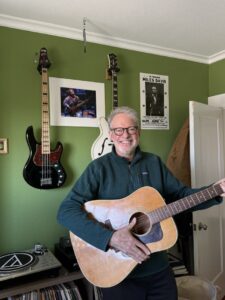
Marc Freedman’s self-imposed pullback from his job as CEO of CoGenerate has freed him to be more creative.
Moving to a co-CEO job has “opened more room for me for creativity and play,” says the 67-year-old Freedman. He has been able to do more personal writing and revived the pleasure he had playing music when younger. “I’m shaking the dust off my old guitar and taking lessons again,” he says.
Brookdale Center’s Finkelstein thinks achievement-driven people who are used to solving problems and making decisions won’t be satisfied with traditional retirements. It doesn’t mean they’ll have to continue to pursue the prestige and income that defined their earlier lives. But, she says, “going on cruises won’t be enough. They need to be actors instead of just audience members in whatever they choose to do.”
No more denial
For myself, the inactivity I was forced into after fracturing my arm became a time for reflection. I’d never before felt “old” or vulnerable to illnesses, but suddenly I couldn’t deny that the path ahead had narrowed and mortality was real. “Do I really want to be sitting at my computer when I take my last breath?” I asked myself.
I was spending a lot of time in physical therapy, and I realized I wanted to use my mind less and move my body more—and not just at the gym but for dancing and for swimming in lakes and ponds at beautiful places I had long wanted to visit.
I knew that if I didn’t start moving more right away and making time for fun activities, I might lose the chance to do so. A friend helped me overcome my fears that I wouldn’t be able to move fast enough or gracefully enough in a modern dance class by directing me to one for seniors and people with disabilities, but taught by professional dancers, where I can stand at the back of the room and go at my own pace. The class is carefree and jubilant and something I never want to miss. And now, in addition to dance, I’m signing up for a tai chi class.

Hymowitz has taken up dance and has other plans now that she’s dialed back professional commitments.
In some ways, that was the easy part; it was a lot harder to change my focus on work, to let go of that voice in my head that told me I needed to accomplish more. I deliberated for a long time about whether to resign from my teaching job, which I’d held for three years. I had designed the course I taught, and I enjoyed getting to know and working with my students. Plus, I admit, I liked having the title “adjunct professor” on my LinkedIn profile. But I’d twice postponed a trip I’d planned with my husband to Spain and Morocco, and I didn’t want to put it off it again, which I’d have to do if I kept teaching.
Friends offered conflicting advice. One asked, “Isn’t it time for you to relax already?” But another said, “Your teaching job is a great platform and can help you land other work.”
It was a choice, I realized, between ambition and time for fun, between continuing to advance in my career, and letting go. I chose the latter. I went on a three-week-long, adventurous trip overseas, and I have had no regrets.
I’m the first to admit that it hasn’t been easy saying goodbye to the career striver I have been for more than five decades. I still have difficulty turning down work that brings me recognition (witness the article you’re reading). But I’m less and less ambitious—and I’m happier and more relaxed. I don’t aggressively go after assignments the way I used to. I’m looking forward to an extended stay in France later this year much more than seeing my name in print. I even like being a lady who lunches because this gives me more time with friends.
What’s more, I’m taking advantage of one of the gifts of retirement, which is being able to try things I don’t excel at—and which I was discouraged from doing during my career when I had to keep proving my proficiency. Now, when I’m asked at gatherings how I’m spending my time, I say, “I’m dancing.”
